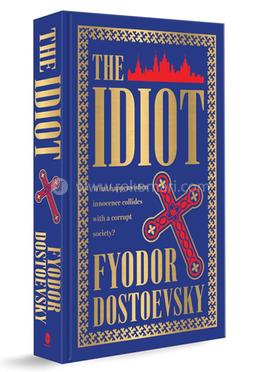
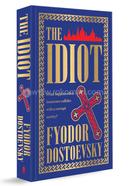
The Idiot is one of Fyodor Dostoevsky’s most profound and emotionally charged novels, centred on Prince Lev Myshkin—a man of extraordinary kindness, innocence and compassion. Returning to Russian society after years of treatment abroad, Myshkin enters a world ruled by ambition, vanity, desire and moral confusion.His sincerity unsettles everyone around him. To some, he appears saintly; to others, foolish. As he becomes entangled in the lives of the proud and beautiful Nastasya Filippovna, the passionate Rogozhin and the socially ambitious Epanchin family, the novel unfolds into a tragic study of love, jealousy, goodness and suffering.Dostoevsky uses Myshkin’s purity to expose the contradictions of society. Can true goodness exist in a world driven by ego and possession? Can compassion survive when surrounded by pride, obsession and cruelty? These questions give the novel its enduring psychological and philosophical force.Perfect for readers of Russian classics, literary fiction and novels of moral depth, The Idiot remains a haunting exploration of innocence, love and the fragile human soul.Why should readers pick this book?
One of Dostoevsky’s Great Novels: A major work by one of the most influential writers in world literature.
A Deep Psychological Classic: Explores complex emotions, moral conflict and the contradictions of human nature.
An Unforgettable Central Character: Prince Myshkin remains one of literature’s most moving portraits of innocence and compassion.
Key Themes
Innocence and Corruption: The novel contrasts pure-hearted goodness with a society shaped by pride and desire.
Love and Obsession: Romantic feeling becomes entangled with jealousy, possession and suffering.
Morality and Society: Dostoevsky questions whether goodness can survive in a morally compromised world.
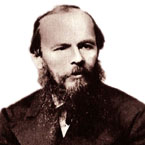
He was born in Russia (11 November 1821 -9 February 1881) Fyodor Mikhaylovich Dostoyevsky was a Russian writer, and philosopher. He is best remembered for Crime and Punishment and The Idiot. Dostoyevsky’s works explore the themes of human psychology in the context of the troubled political, social, and spiritual atmosphere of 19th century Russia and he has influenced generations of writers both in his homeland and abroad. The above title was adapted several times into films, most notably in 1958 by Richard Brooks, starring Yul Brynner, Richard Basehart, William Shatner and Albert Salmi.
 Hotline: 16297 (9.00 AM to 11.00 PM)


 Hello, Sign in
 Cart
Cart