Book
10 min read
Best Spoken English Books in Bangladesh for Beginners to Advanced Learners
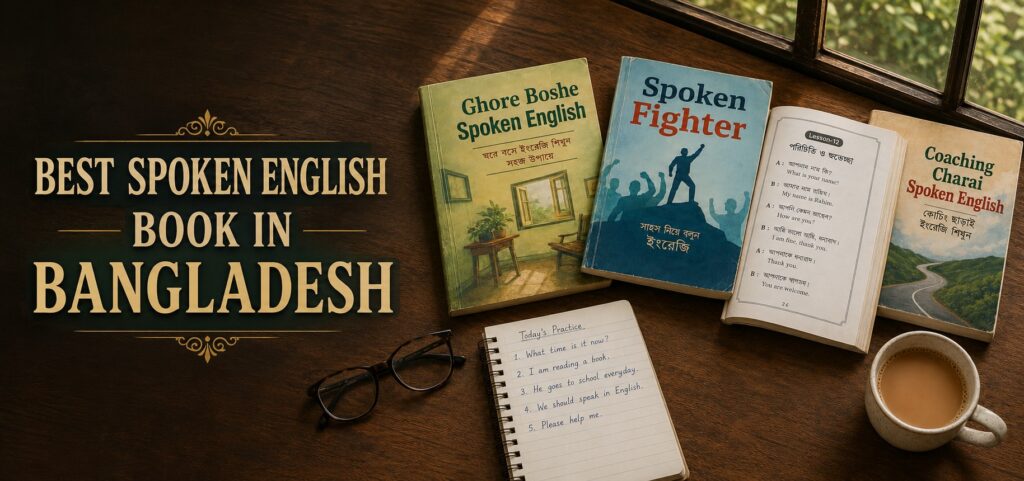
Ghore Boshe Spoken English is a strong overall choice for Bangla-speaking beginners. Spoken Fighter provides a more detailed course for learners with weak basics, Coaching Charai Spoken English by Saifur Rahman Khan works well for self-study learners on a tight budget. However, the right book depends on your current level and speaking goal.
This guide reviews eight verified books popular in Bangladesh and scored on Bangla language support, sentence-building method, pronunciation guidance, exercise quality, and price. Students, job seekers, IELTS candidates, freelancers, and parents buying for children will find a clear match here.
Why Spoken English Books Matter in Bangladesh?
Spoken English books help Bangladeshi students and job seekers speak with confidence during viva exams, interviews, and daily conversations. Most learners study grammar for years but get little chance to practice speaking, which leaves a gap between reading and real conversation. Bangla-supported guides close this gap at a lower cost than coaching centers.
- Education and exams. Bangladeshi students face English speaking demands early, from classroom presentations to university viva exams.
- Jobs and careers. Job seekers meet the same pressure in BCS interviews, bank recruitment panels, and private-sector hiring. Customer-service roles demand instant spoken responses with no time to translate mentally.
- Freelancing and global work. Freelancers handle live client calls across Europe and North America, where clear pronunciation affects trust and repeat work.
- IELTS and workplace needs. IELTS and overseas study applicants take a speaking test that rewards fluent speech instead of memorized answers. Workplace communication also runs on spoken English, from daily meetings to quick updates with foreign colleagues.
- The practice gap. Most learners get few chances to practice speaking outside a classroom, as Bangla is the native language at home. This leaves many students strong in grammar but weak in real conversation.
- Why books help. A spoken English guide with Bangla explanations closes this gap. Low-cost self-study guides also help readers who cannot afford coaching centers or tutors.
Quick Comparison - Best Book for Spoken English in Bangladesh
| Spoken Book | Features |
|---|---|
|
|
|
|
|
|
|
|
|
|
|
|
|
|
|
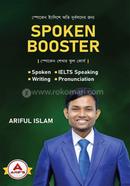
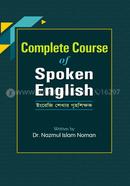
8 Best Spoken English Books in Reviewed
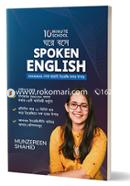
1. Ghore Boshe Spoken English
Choose this guide first if daily conversation confidence is the main goal. And Bangla guided spoken English lessons without heavy grammar.
- Best for: Bangla-medium learners who want daily speaking confidence without grammar theory.
- Author: Munzereen Shahid.
- Learning level: Beginner to intermediate.
- Language support: Bangla and English.
- Learning method: Sentence-pattern and grammar-free speaking rules.
- Exercises: Yes, with practice sentences after each chapter.
- Latest edition: Current print run, Tamralipi.
Why we Picked it:
Munzereen Shahid built her reputation teaching English through her Ten Minute School lessons. Ghore Boshe Spoken English carries that same simple explanation style into a printed guide. Readers who feel shy speaking English in front of friends will recognize the same situations covered in the opening chapters.
What you will learn:
This book covers sentence building rules without heavy grammar terms, common daily phrases, and confidence building drills. Bangla explanations sit beside every English rule so beginners never lose the thread of a lesson.
Core benefits:
- Starts spoken English practice without long grammar lessons.
- Gives shy learners a clear starting point for speaking aloud.
- Builds confidence for classroom and group presentations.
- Teaches practical English for shopping, travel, hospitals, and restaurants.
- Prepares learners for job and visa interview conversations.
- Corrects common pronunciation mistakes made by Bangla speakers.
- Explains British and American pronunciation differences clearly.
Limitations: Offers limited coverage for formal interview or presentation English. Contains fewer advanced vocabulary sections than exam-focused titles.
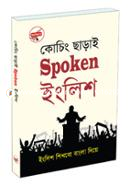
2. Coaching Charai Spoken English
Pick this title if budget and self-paced learning matter more than extra media support. And who wants Bangla-guided spoken English lessons for independent study.
- Best for: Learners who cannot afford coaching centers and want a structured home routine.
- Author: Saifur Rahman Khan
- Learning level: Beginner
- Language support: Bangla and English
- Learning method: Situation based conversation practice
- Exercises: Yes, with vocabulary lists and past-year question samples
- Latest edition: 2026 print, Saifur's Publications, 208 pages
Why we Picked it:
Saifur Rahman Khan writes for readers who want progress without paying for a coaching center. Coaching Charai Spoken English guides complete beginners through daily situations step by step. The tone stays practical rather than academic.
What you will learn:
Readers get situational dialogues, word meanings, past and past-participle forms, and sentence-building tricks. The final chapters include competitive exam questions sorted by year for exam-focused readers.
Core benefits:
- Starts spoken English from a level suitable for weak beginners.
- Uses Bangla explanations to make English lessons easier to follow.
- Supports self-study without depending on coaching classes.
- Simplifies sentence building with practical rules and techniques.
- Improves word knowledge through meanings and pronunciation guidance.
- Connects spoken English practice with competitive exam preparation.
Limitations: Provides fewer audio or video learning aids compared to newer guides. Requires strong self-discipline since no live instructor supports the reader.
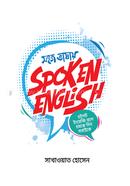
3. Sohoj Bhashay Spoken English
Choose this guide if you want a Bangla guided self-study book that teaches solo English-speaking practice and job interview preparation is the top priority
- Best for: Graduates who struggle with a two-minute self-introduction in English.
- Author: Md. Shakhawat Hossain
- Learning level: Intermediate
- Language support: Bangla and English
- Learning method: Dialogue based professional speaking practice
- Exercises: Yes Latest edition: Current print, Adarsha
Why we Picked it:
Many Bangladeshi graduates finish a degree but cannot present themselves clearly in English during a job interview. Sohoj Bhashay Spoken English targets exactly this problem. Md. Shakhawat Hossain builds lessons around workplace and global job-market scenarios.
What you will learn:
Readers practice self-introduction scripts, professional vocabulary, and common interview responses. Sentence patterns focus on clarity under pressure rather than casual chat.
Core benefits:
- Builds speaking confidence without depending on a coaching centre.
- Guides learners from basic sentences to advanced spoken English.
- Shows how to practise speaking without a teacher or partner.
- Prepares learners to introduce themselves clearly in English.
- Helps students organise ideas before speaking in front of others.
- Gives learners a structured path instead of random vocabulary memorisation.
Limitations: Offers less content for casual daily conversation practice. May feel too limited for readers who want a general spoken English foundation.
4. Complete Course of Spoken English
Choose this book if you want to create sentences naturally instead of memorizing fixed conversations and overcoming speaking fear.
- Best for: Students who want a full syllabus-style course in one guide.
- Author: Dr. Nazmul Islam Noman
- Learning level: Beginner to intermediate
- Language support: Bangla and English
- Learning method: Grammar-linked speaking practice
- Exercises: Yes Latest edition
Why we Picked it:
Dr. Nazmul Islam Noman organizes this book like a classroom course rather than a casual phrasebook. Complete Course of Spoken English moves learners through grammar rules connected directly to speaking tasks. School and college students often prefer this structured method.
What you will learn:
Chapters cover tense usage, sentence construction, common verb patterns, and speaking exercises tied to each grammar point. The lesson order builds gradually from simple to complex sentences.
Core benefits:
- Targets learners who know English words but cannot form sentences confidently.
- Builds natural speaking skills without relying on memorized dialogue.
- Reduces fear when answering unexpected questions in English.
- Bangla guidance to explain spoken English methods clearly.
- Focuses on practical fluency instead of school-style grammar memorization.
- Develops confidence for starting conversations without preparing every sentence.
- Fits learners who understand written English but hesitate during real conversations.
Limitations: Teaches quick phrases more slowly than situation-based guides. Includes more grammar lessons than conversation-only books.
5. Spoken Fighter

Choose this book only if English speaking currently feels impossible to start. And you want help with structured drills, common phrases and practical conversation in one book.
- Best for: Readers who feel completely blank when starting English speaking practice.
- Author: Rahat Khan
- Learning level: Beginner
- Language support: Bangla and English
- Learning method: Lecture based sequential speaking course
- Exercises: Yes Latest edition: Current print
Why we Picked it:
Rahat Khan designed Spoken Fighter for the weakest student or English learners in Bangladesh. The lessons follow a lecture sequence. It is similar to a classroom recording turned into print.
What you will learn:
The course opens with absolute basics before moving toward daily conversation. Each lecture-style chapter builds on the last without assuming prior knowledge.
Core benefits:
- Builds thousands of sentences from 40 reusable sentence patterns.
- Provides five-minute daily drills for a structured 90-day speaking routine.
- Organizes 500 common phrases by practical conversation situations.
- 300 questions and answers for active speaking practice.
- Breaks difficult sentences into smaller parts before rebuilding them.
- Prepares learners for interviews, presentations, and casual conversations.
- Connects useful vocabulary directly with sentence-making practice.
Why we Picked it:
Starts from the very beginning without assuming basic vocabulary knowledge. Follows a lecture sequence that feels like you are in the live class. Rebuilds confidence for readers who failed with other guides. Covers basic sentence structure before moving to advanced speaking tasks.
Limitations: Costs more than several budget alternatives on this list. Moves slowly for readers who already know basic sentence patterns.
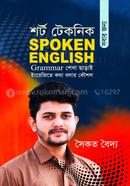
6. Short Technique English Spoken Magic
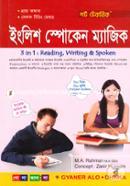
Buy this book as a supporting guide, not a standalone speaking course. If you prefer shortcut based lessons that explain how sentences work.
- Best for: Who wants fast and memorable speaking tricks on a small budget.
- Author: M. A. Rahman
- Learning level: Beginner
- Language support: Bangla and English
- Learning method: Quick sentence-pattern tricks
- Exercises: Practice sections
- Latest edition: Current print
Why we Picked it:
Short Technique English Spoken Magic includes common greetings, daily phrases, and quick sentence formulas in a compact guide. M. A. Rahman keeps explanations short so learners can finish a chapter in minutes.
What you will learn:
Readers get greeting phrases, short sentence formulas, and quick-reference speaking tricks organized by topic.
Core benefits:
- Teaches greetings that help learners start conversations naturally.
- Explains English and Bangla expression differences to prevent direct translation mistakes.
- Corrects common pronunciation errors made by Bangla speaking learners.
- Shows how silent letters change the pronunciation of familiar words.
- Builds expressive speaking with common exclamations and emotional phrases.
- Develops reading, writing, and speaking skills within one structured course.
- Covers workplace English, interviews, dialogues, and situational expressions.
Limitations: Covers too little for learners who need full sentence-building lessons. Gives less grammar and pronunciation help than larger guides.
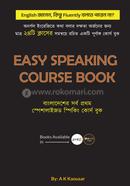
7. 30 Dine Easy English Speaking Course

Choose this book if you need a structured 30 days self study learning routine .
- Best for: Learners who want a short and time-bound speaking plan.
- Author: Rafi Ahammad
- Learning level: Beginner
- Language support: Bangla and English
- Learning method: 30-day structured plan
- Exercises: Yes Latest edition: Current print
Why we Picked it:
Rafi Ahammad structured this book around a 30-day challenge instead of an open-ended course. Each day covers one focused speaking skill, which suits learners who need visible progress fast. Students preparing for an upcoming viva often choose this format.
What you will learn:
Daily lessons cover greetings, common questions, short answers, and gradual sentence-building steps across one month.
Core benefits:
- Breaks spoken English learning into a focused 30-day journey.
- Makes daily progress easier to track through a time-based course plan.
- Connects English examples with familiar explanations for faster understanding.
- Good for learners who struggle to organize spoken English study alone.
- Helps learners restart English practice after a long study gap.
- Offers a practical entry point before advanced fluency or IELTS training.
Limitations: Leaves little room for deep grammar explanation within each daily lesson. May feel rushed for readers who need slower, repeated practice.
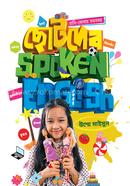
8. Chotoder Spoken English
Buy this book for children starting to speak English between ages six and eleven. Playful spoken English starter with pronunciation audio for children.
- Best for: Parents who want to teach young children basic spoken English at home.
- Author: Umme Maisun
- Learning level: Children
- Language support: Bangla and English
- Learning method: Picture supported dialogue practice
- Exercises: Yes Latest edition: Current print
Why we Picked it:
Umme Maisun wrote this book as a young content creator herself, which shapes a tone children find approachable. Chotoder Spoken English uses short dialogues and familiar topics like family, school, and play. Parents can guide a child through each lesson without strong English skills.
What you will learn:
Lessons cover greetings, family vocabulary, classroom phrases, and short question-and-answer drills aimed at young readers.
Core benefits:
- Makes first English conversations feel less scary for young learners.
- Uses breakfast, school, and home routines for practical speaking practice.
- Introduces British pronunciation before common speaking mistakes become habits.
- Explains individual English sounds through simple phonetic guidance.
- Combines reading, listening, and video support in one learning routine.
Limitations: Offers no content suited to teenage or adult learners. Requires parent involvement since young readers cannot self-study alone.
Choose a Spoken English Book by Learning Goal
The right spoken English book depends on the learner's specific goal, not just their level. Beginners should start with Coaching Charai Spoken English or 30 Day Easy English Speaking Course, while job seekers should choose Sohoj Bhashay Spoken English.
- For beginners: Coaching Charai Spoken English and 30 Dine Easy English Speaking Course both start from zero with Bangla support.
- For daily conversation: Ghore Boshe Spoken English covers greetings, phone calls, and casual talk in realistic detail.
- For students: Complete Course of Spoken English connects classroom grammar to speaking practice.
- For job interviews: Sohoj Bhashay Spoken English focuses on self-introduction and workplace vocabulary.
- For very weak learners: Spoken Fighter rebuilds basics through a lecture-style sequence.
- Best budget option: Short Technique English Spoken Magic delivers quick phrases at the lowest price on this list.
- For children: Chotoder Spoken English uses picture-supported dialogue for young readers.
- For freelancers: Sohoj Bhashay Spoken English also supports client-facing vocabulary useful for remote work calls.
How to Choose a Spoken English Book for Bengali People
Choosing a spoken English book starts with matching the guide to a clear goal, such as daily conversation, job interviews, or a school viva. Beginners should also check for Bangla explanations, real dialogue, and a structured practice system before buying.
- Match the goal first. First fix the learning goal. A job focused title will not prepare a learner for an IELTS cue-card task.
- Check the difficulty level. Know your level of understanding. Beginners need Bangla meanings. Intermediate readers can handle English-only explanations.
- Look for real dialogue. Example sentences help readers remember usage faster than isolated word lists.
- Check the practice system. Regular exercises support long-term recall better than passive reading.
- Consider Bangla support. Bangla meanings help beginners start faster. Readers should still reduce translation dependence over time.
- Verify the edition. A recent print often fixes errors found in older copies.
FAQ
Which English book is best to read?
Ghore Boshe Spoken English is a strong overall pick for Bangladeshi readers. It uses Bangla explanations and daily conversation drills. The book suits beginners and intermediate learners.
Can I learn English in 21 days?
Basic conversation habits can improve in 21 days. Full fluency takes longer than 21 days. Daily speaking practice speeds up progress. 30 Dine Easy English Speaking Course offers a structured 30-day plan for fast starters.
What is A1, A2, B1, B2, C1, C2 in English?
These are CEFR levels that measure English ability. A1 and A2 mark beginner levels. B1 and B2 mark intermediate levels. C1 and C2 mark advanced fluency. Most Bangladeshi spoken English guides target the A1 to B1 range.
What are 7 speaking skills?
The 7 core speaking skills are pronunciation, fluency, vocabulary, grammar, listening, comprehension, and confidence. Each skill supports clear spoken communication. Weak listening skills often slow down speaking progress. Guides like Sohoj Bhashay Spoken English target several of these skills together.
What is the 3 2 1 rule of speaking?
The 3 2 1 rule is a practice drill for building fluency. A speaker talks on a topic for 3 minutes. The same topic gets repeated in 2 minutes, then in 1 minute. This drill forces faster, clearer sentence formation. Learners can apply this rule using dialogues from any spoken English guide.
How can I improve my English speaking skills?
Daily speaking practice improves English speaking skills fastest. Listening to native audio also builds comprehension. Recording your own voice helps catch pronunciation errors. A structured guide like Coaching Charai Spoken English adds daily exercises for steady progress.
Final Verdict
- Choose Ghore Boshe Spoken English if you want the strongest overall beginner guide.
- Choose Spoken Fighter if your English basics are very weak.
- Choose the Complete Course of Spoken English if you want deeper self-study and more exercises.
Buying the right book is only the first step. Regular speaking, listening, and revision produce the result.