Hotline: 16297 (9.00 AM to 11.00 PM)


 Hello, Sign in
 Cart
Cart 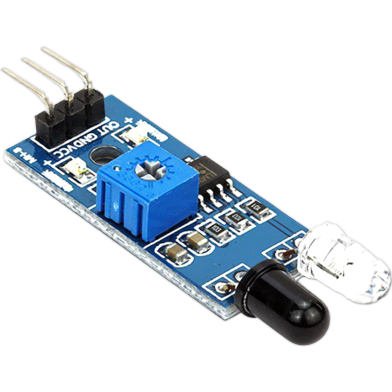
.svg)





The Infrared Obstacle Avoidance IR Sensor Module detects physical barriers via reflected infrared light within a 2-30 cm window. Digital TTL signals provide active low logic to Arduino, ESP32, and Raspberry Pi microcontrollers. With a 3.3V to 5V power requirement, it integrates into mobile robot chassis for real-time collision prevention.
Key Features
- Adjustable Sensitivity: 2-30cm detection range modified via an onboard potentiometer. Rotate the screw to calibrate distance for specific road dust or surface conditions.
- LM393 Comparator IC: High-speed signal processing for stable digital switching. Fast logic transitions prevent hardware lag in high-speed line follower robots.
- Dual LED Indicators: Dedicated lights for power status and obstacle detection. Visual cues confirm the sensor is powered and identifying objects during testing.
- 35-Degree Detection Angle: Wide infrared beam covers frontal paths effectively. Broad coverage reduces the number of sensors needed for basic obstacle avoidance.
- Active Low Logic: Digital TTL output drops to 0V when detecting an object. Direct wiring to MCU pins simplifies code for infrared proximity sensor BD projects.
Frequently Asked Questions
How to adjust IR sensor range?
Rotate the onboard potentiometer clockwise or counter-clockwise to change the 2-30 cm threshold. This mechanical adjustment sets the exact distance where the digital output triggers.
Does IR sensor work in sunlight?
Direct sunlight interferes with the infrared receiver and causes false triggers. Use the sensor indoors or under shade to maintain consistent 35-degree detection accuracy.
What is the operating voltage?
This module operates between 3.3V and 5V DC. It draws approximately 20mA, making it compatible with most microcontroller power pins.