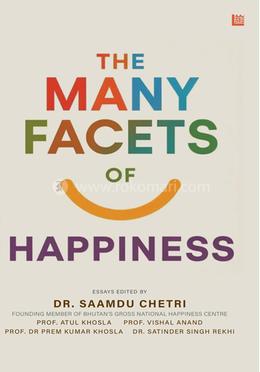
What does it truly mean to be happy?
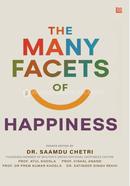
Across philosophy, neuroscience, economics, spirituality, yoga, and culture, The Many Facets of Happiness: A Shoolini Anthology explores this question through 22 rich, interdisciplinary chapters — from the ancient Himalayan wisdom of Bhutan's Gross National Happiness (GNH) to the latest insights from positive psychology, mindfulness neuroscience, and AI-driven wellbeing metrics.
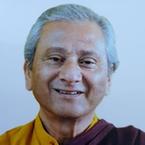
Edited by Dr Saamdu Chetri — globally recognised as the Founder of Bhutan's Gross National Happiness framework, the 'Happiness Guru' (BBC), and author of How to Bring Up Happy Children — alongside Prof. Atul Khosla and an eminent editorial team from Shoolini University in the Himalayan foothills, this anthology brings together researchers, scholars, and practitioners from management science, microbiology, civil engineering, liberal arts, psychology, pharmacy, and spirituality.
Dr Chetri's decades of experience in Bhutan's GNH and his landmark book How to Bring Up Happy Children — which applies GNH's nine domains to raise children in harmony with themselves, others, and nature — provide the philosophical backbone of this anthology. The same deep conviction that happiness is not a niche topic but a foundation for all human flourishing runs through every chapter.
What you will discover:
The history of happiness — from hunter-gatherers to the Human Expectation Age, drawing on Harari, McMahon, and evolutionary psychology
The neurochemistry of happiness — dopamine, serotonin, oxytocin, and the brain's reward circuits explained for researchers and readers
Mindfulness as a superpower — neuroscience-backed practices to rewire the brain, build emotional resilience, and make better decisions
The economics of happiness — GNH vs GDP, the Easterlin Paradox, Kahneman's well-being research, and what money can and cannot buy
Yoga, Karma, and coaching for joy — embodied practices for daily happiness across Eastern and Western traditions
AI and digital wellbeing — how technology and mobile apps are reshaping the pursuit of happiness in the 21st century
Education for happiness — building institutional frameworks for student and faculty wellbeing
Cultural perspectives — from Holocaust narratives and Viktor Frankl's logotherapy to happiness idioms across three languages
For readers of:
The Happiness Hypothesis (Jonathan Haidt, cited throughout) · Flourish (Martin Seligman, PERMA model) · Ikigai (Garcia
 Hotline: 16297 (9.00 AM to 11.00 PM)


 Hello, Sign in
 Cart
Cart