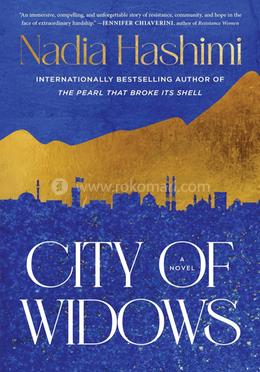
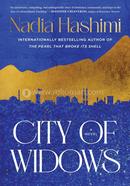
From bestselling novelist Nadia Hashimi—a gripping, occasionally terrifying, yet ultimately hopeful novel focusing on the women of Afghanistan in the years since the Taliban regained power.In February 2020 the US began to withdraw troops from Afghanistan after nearly twenty years of occupation. A whole generation of Afghan women had been born during that time—women who had grown up in relative peace, gone to school, entered the professions, even served in the army and Parliament. The women of Afghanistan watched as the Taliban filled the streets again. They knew everything was about to change.In the bustling, cosmopolitan city of Kabul, women are TV newscasters, shop owners, doctors, teachers, lawyers, even soldiers. They include Marjan, who fought with the Afghan army, and will risk everything to keep her daughter Hawa safe. In her earlier days Marjan was called Rahima and had lived the life of a bacha posh—a girl raised as a boy until she came of age. Forced into an early marriage, Rahima took the name Marjan when she fled her warlord husband. She’s created a whole new life for herself, one she will not give up easily.So has Soraya, who defiantly wore red lipstick as she led the army’s all-female combat force over the objections of her upper-class family. Soraya’s now a wanted woman whose brother may choose not to shelter her from the Taliban. What will become of her? Or Mina, a journalist and broadcaster whose beautiful face is known to everyone in Kabul—including the new regime?Fight or flight? Or find a third way? One thing is for certain: none of these women will meekly accept her fate.An epic saga of fear, resistance, change, and reinvention, City of Widows gives voices to the unforgettable Afghan women at a crossroads of history.
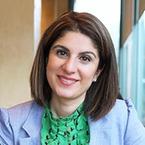
Nadia Hashimi is a pediatrician turned novelist who draws on her Afghan culture to craft internationally bestselling books for adults as well as young readers. Her novels span generations and continents, taking on themes like forced migration, conflict, poverty, misogyny, colonialism, and addiction. She enjoys conversations with readers of all ages in libraries, book festivals, classrooms, and living rooms. With translations in seventeen languages, she’s connected with readers around the world.Nadia was born and raised in New York and New Jersey. Both her parents were born in Afghanistan and left in the early 1970s, before the Soviet invasion. Her mother, granddaughter of a notable Afghan poet, traveled to Europe to obtain a Master’s degree in civil engineering and her father came to the United States, where he worked hard to fulfill his American dream and build a new, brighter life for his immediate and extended family. Nadia was fortunate to be surrounded by a large family of aunts, uncles and cousins, keeping the Afghan culture an integral part of their daily lives.Nadia graduated from Brandeis University with degrees in Middle Eastern Studies and Biology. She studied medicine in Brooklyn, New York, and then completed her pediatric residency training at NYU and Bellevue hospitals before moving to Maryland with her husband. On days off from a busy emergency room and after years of avid reading, she began crafting stories that drew on her heritage and the complex experiences of Afghans. In 2003, she made her first trip to Afghanistan with her parents who had not returned to their homeland since leaving in the 1970s. She continues to serve on boards of organizations committed to educating and nurturing Afghanistan’s most vulnerable children and empowering the female leaders of tomorrow. She is a member of the US-Afghan Women’s Council and an advisor to Kallion, an organization that seeks to elevate leadership through humanities. Locally, she serves as a Montgomery County health care commissioner and organizing committee member of the Gaithersburg Book Festival.She and her husband are the beaming parents of four curious, rock star children, an African Grey parrot named Nickel who reminds the kids to brush their teeth, and Justice, the hungriest Rhodesian Ridgeback you’ve ever met.
 Hotline: 16297 (9.00 AM to 11.00 PM)


 Hello, Sign in
 Cart
Cart