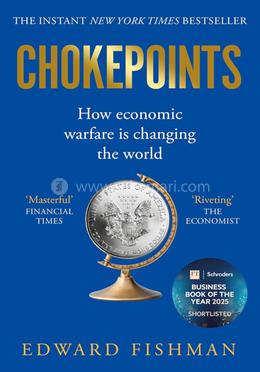
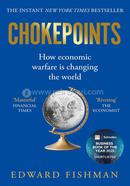
It used to be that ravaging another country’s economy required blockading its ports and laying siege to its cities. Now all it takes is a statement posted online by the U.S. government. In Chokepoints, Edward Fishman, a former top American sanctions official, takes us deep into the back rooms of power to reveal the untold history of the past two decades of U.S. foreign policy. As Vladimir Putin, Xi Jinping, and Ayatollah Khamenei wreaked havoc on the world stage, mavericks within the U.S. government built a fearsome new arsenal of economic weapons. Successive U.S. presidents have relied on these weapons to address the most pressing national security threats—for good and for ill. Chokepoints provides a thrilling account of one of the most transformative developments of our time, demystifying how the U.S. government harnesses the power of Wall Street, Silicon Valley, and Big Oil against America’s enemies. At the center of the narrative are the trailblazing diplomats, lawyers, and financial whizzes who have masterminded America’s escalating economic wars against Russia, China, and Iran.Control over economic chokepoints—such as the U.S. dollar, advanced microchip technology, and critical minerals—has become the key to geopolitical power in the twenty-first century. The result is a new world order: an economic arms race among great powers and a fracturing global economy. Chokepoints is the definitive account of how America pioneered a new, hard-hitting style of economic warfare—and how it’s changing the world.
Title
Chokepoints : How economic warfare is changing the world
Edward Fishman is one of the world’s leading authorities on economic statecraft and sanctions. He teaches at Columbia University’s School of International and Public Affairs and is a senior research scholar at the Center on Global Energy Policy. He previously served at the US State Department, the Pentagon and the Treasury Department, earning awards for his work implementing the Iran nuclear deal and designing and negotiating sanctions on Russia after its 2014 annexation of Crimea. His analysis is regularly featured by the BBC, Financial Times, Economist, New York Times and Wall Street Journal, and he frequently writes for publications such as Foreign Affairs and Politico. He holds a BA in History from Yale, an M.Phil in International Relations from Cambridge and an MBA from Stanford.