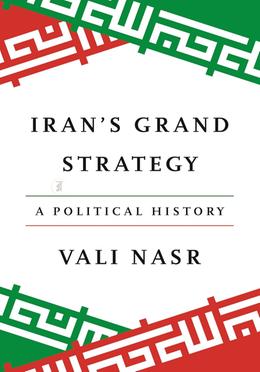
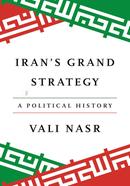
Iran presents one of the most significant foreign policy challenges for America and the West, yet very little is known about what the country’s goals really are. Vali Nasr examines Iran’s political history in new ways to explain its actions and ambitions on the world stage, showing how, behind the veneer of theocracy and Islamic ideology, today’s Iran is pursuing a grand strategy aimed at securing the country internally and asserting its place in the region and the world. Drawing on memoirs, oral histories, and original in-depth interviews with Iranian decision makers, Nasr brings to light facts and events in Iran’s political history that have been overlooked until now. He traces the roots of Iran’s strategic outlook to its experiences over the past four decades of war with Iraq in the 1980s and the subsequent American containment of Iran, invasion of Iraq in 2003, and posture toward Iran thereafter. Nasr reveals how these experiences have shaped a geopolitical outlook driven by pervasive fear of America and its plans for the Middle East. Challenging the notion that Iran’s foreign policy simply reflects its revolutionary values or theocratic government, Iran’s Grand Strategy provides invaluable new insights into what Iran wants and why, explaining the country’s resistance to the United States, its nuclear ambitions, and its pursuit of influence and proxies across the Middle East.
Vali Nasr is the Majid Khadduri Professor of International Affairs and Middle East Studies at Johns Hopkins-SAIS, and Non-Resident Senior Fellow at Atlantic Council’s South Asia Center. Between 2012 and 2019 he served as the Dean of the School, and between 2009 and 2011 as Senior Advisor to U.S. Special Representative for Afghanistan and Pakistan, Ambassador Richard Holbrooke. Nasr has advised world leaders and major corporations. Nasr is the author of Iran’s Grand Strategy: A Political History; How Sanctions Work, Iran and the Impact of Economic Warfare; The Dispensable Nation: American Foreign Policy in Retreat; Forces of Fortune: The Rise of a New Middle Class and what it Means for Our World; The Shia Revival: How Conflicts within Islam will Shape the Future; Democracy in Iran: History and the Quest for Liberty; Islamic Leviathan: Islam and State Power; Vanguard of the Islamic Revolution: Jamaat Islami of Pakistan; and Mawdudi and the making of Islamic Revivalism; and also the author several book chapters and articles in scholarly journals, and commentary in The New York Times, Foreign Affairs, Foreign Policy, Financial Times, Wall Street Journal, and The Washington Post. He is the recipient of Carnegie Scholar Award, and the Frank Guggenheim, and MacArthur Foundation research fellowships. Nasr has served on the Board of Trustees of Rockefeller Brothers Fund; Advisory Boards of Blovatnik School of Government, Oxford University; Rajaratnam School of International Studies in Singapore; and Board of International Advisors of American University of Beirut. He is a member of World Economic Forum’s Global Action Council. He was selected as Henry Alfred Kissinger Resident Scholar at Library of Congress for 2024-25. He received his BA from Tufts University in International Relations summa cum laude and was initiated into Phi Beta Kappa in 1983. He earned his masters from the Fletcher School of Law in and Diplomacy in international economics and Middle East studies in 1984, and his PhD from MIT in political science in 1991.