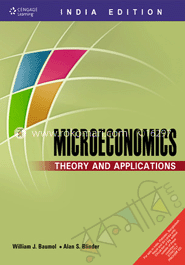
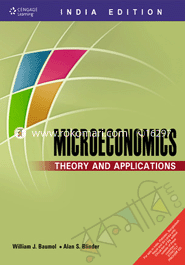
Book Summary of Microeconomics: Theory and Applications This text is well-known for using the Keynesian model in the teaching of economics. The text uses the aggregate supply/aggregate demand model as a fundamental tool for learning microeconomics. It achieves the right level of rigor and detail, presenting complicated concepts in a relatively straightforward manner and using timely economic data.
Key Feature • A new analysis of human capital's impact on economic growth, including a discussion on minimum wage and household protection has been added for more up to date coverage of these prevalent topics • A more developed discussion of consumer choice has been added, including expanded coverage on budget limitations and constraints when discussing consumer theory • Each chapter ends with questions and problems for review to help students complete homework and prepare for exams
Table of Contents Part I: Getting Acquainted with Economics 1. What Is Economics? 2. The Economy: Myth and Reality 3. The Fundamental Economic Problem: Scarcity and Choice 4. Supply and Demand: An Initial Look Part II: The Building Blocks of Demand and Supply 5. Consumer Choice: Individual and Market Demand 6. Demand and Elasticity 7. Production, Inputs, and Cost: Building Blocks for Supply Analysis 8. Output, Price, and Profit: The Importance of Marginal Analysis 9. The Economics of the Stock Market Part III: Markets and the Price System 10. The Firm and the Industry under Perfect Competition 11. Monopoly. 12. Between Competition and Monopoly 13. Limiting Market Power: Regulation and Antitrust Part IV: The Virtues and Limitations of Markets 14. The Case for Free Markets I: The Price System 15. The Shortcomings of Free Markets 16. The Market's Prime Achievement: Innovation and Growth 17. Externalities, the Environment and Natural Resources 18. Taxation and Resource Allocation Part V: The Distribution of Income 19. Pricing the Factors of Production 20. Labor and Entrepreneurship: The Human Inputs 21. Poverty, Inequality, and Discrimination 22. International Trade and Comparative Advantage
 Hotline: 16297 (9.00 AM to 11.00 PM)


 Hello, Sign in
 Cart
Cart