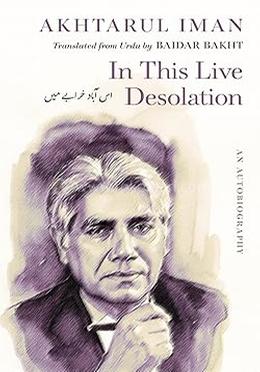
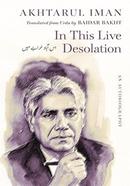
The writer of this iconic line from Waqt (1965) was also one of modern Urdu’smost distinctive poets, and among the most influential, if less remembered, cultural figures of post-Independence India. Born amid hardship and constant movement across the villages of UP and Haryana, Akhtarul Iman, the son of a wayward imam, grew up between mosques and makeshift homes before finding his way to Delhi, Aligarh and finally the film world of Mumbai. In the process, he helped shape not only modern Urdu verse but the idiom of Hindi cinema.
Told with a restraint that marked his temperament, mirrored in the subtle intellectual poise of his art, this autobiography moves through memories of rural childhood, the harsh years in a Daryaganj reformatory, early literary friendships and the long struggle for survival in cinema. Along the way appear many of the figures who shaped the cultural landscape of the mid‑twentieth century—progressive poets and critics such as Faiz Ahmed Faiz, Meeraji, Shahryar, Krishan Chander, Jigar Muradabadi, Josh Malihabadi, Baqar Mehdi, Nida Fazli; and filmmakers and actors including W.Z. Ahmed, B.R. Chopra, Protima Dasgputa, Rajkumar and Amjad Khan—anchors of the literary and cinematic worlds through which he moved. Akhtarul Iman’s recollections, though selective and episodic, reveal a private but restless and sharply observant mind—animated as much by the socialist fervour of his times as by a stubborn devotion to craft and artistic integrity.
Presented with translations of Iman’s poems referenced in the text, In This Live Desolation brings into English a spare yet deeply felt self-portrait of an artist shaped by dispossession and upheaval, but never defeated by them.
Akhtarul Iman (1915–1996) was one of the most distinctive voices of modern Urdu poetry. He also had a long and influential career in Hindi cinema as a screenwriter. He won the Filmfare Award for Best Dialogue twice, in 1963 and again in 1966. He was awarded the 1962 Sahitya Akademi Award in Urdu, for his poetry collection Yaadein.
 Hotline: 16297 (9.00 AM to 11.00 PM)


 Hello, Sign in
 Cart
Cart