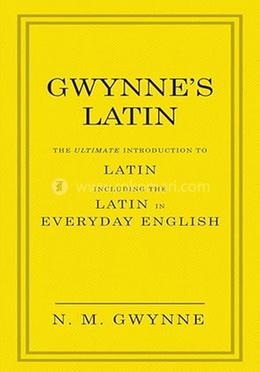
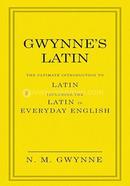
Mr Gwynne, author of the Sunday Times bestselling phenomenon Gwynne’s Grammar, is just as emphatic about the importance of Latin as he is about the importance of grammar. From the novice to the more well-versed, Gwynne’s Latin is essential for anyone interested in learning Latin; Mr Gwynne promises to teach you more Latin in half an hour than you would learn from years of being taught Latin at school. He also includes a fascinating section on everyday Latin usage, which discusses all the Latin words and idioms we still use today, such as ‘quid pro quo’ and ‘sui generis’. Though we need no further convincing – as we know, Mr Gwynne is never wrong – here are just some of the many reasons why Latin is utterly wonderful: - Latin is an academic subject easy enough for the least intelligent of us to grasp all the basic elements of, and yet difficult enough to be demanding for its greatest scholars. - For well over a thousand years it was the means of communication that united the whole of Europe culturally and in every other significant way.
- It is the direct ancestor of, between them, the five most widely-spoken European languages, and both of the official South American languages. - It is the ancestor and source of more than half of the English language, partly directly and partly through French, which for some centuries was England’s official language. Following in the same beautifully designed footsteps of Gwynne’s Grammar, Gwynne’s Latin will teach you all the fundamentals of Latin quickly, thoroughly and better than all the competition.
Formerly a successful businessman, N. M. Gwynne has for many years been teaching just about every sort of subject to just about every sort of pupil in just about every sort of circumstance—English, Latin, Greek, French, German, mathematics, history, classical philosophy, natural medicine, the elements of music and “How to start up and run your own business”—in lecture-halls, large classrooms, small classrooms and homes—to pupils aged from two years old to over seventy—of many different nationalities and in several different countries—and since 2007 “face-to-face” over the Internet. English grammar has been the basis of many of the subjects he has taught. His teaching methods are very much in accordance with the traditional, common-sense ones, refined over the centuries, that were used almost everywhere until they were abolished worldwide in the 1960s and subsequently. His teaching has been considered sufficiently remarkable—both in its unusualness in today’s world and in its genuinely speedy effectiveness—to have featured in newspaper and magazine articles and on television and radio programmes.