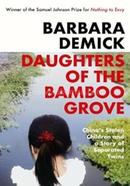
In 2000, a Chinese woman gave birth to twins in a bamboo grove, trying to avoid detection by the government because she already had two daughters. Two years later, an American couple travelled to Shaoyang to adopt a Chinese toddler they thought had been abandoned. Their understanding had been that China's brutal one-child policy was leading to hundreds of abandoned girls, desperate for the care of adopted parents. What they didn't know - and what award-winning journalist Barbara Demick uncovered in 2007, while working as a correspondent in Beijing - was that their daughter had been snatched from her beloved family and her identical twin. Under China's one-child policy hundreds of poor Chinese were giving up their children due to soaring fines and threats of violence. More sinister still, international demand for adoptees was sky-rocketing, and local officials were forcibly seizing children and trafficking them to orphanages, who were selling them abroad. Daughters of the Bamboo Grove tells the gripping story of separated twins, their respective fates in China and the USA, and Barbara Demick's role in reuniting them against huge odds. Painting a rich portrait of China's history and culture, it asks questions about the roots, impact and consequences of China's one-child policy, the ethics of international adoption, and, ultimately, the assumptions and narratives we hold about the quality of lives lived in the East and the West.

Barbara Demick is a former foreign correspondent for the Los Angeles Times who served as bureau chief in Beijing and in Seoul. Her book, Nothing to Envy:Ordinary Lives in North Korea, won the U.K.'s top non-fiction prize, the Samuel Johnson award, in 2010 and was a finalist for both the National Book Awards and a National Book Critics Circle Awards. Demick's earlier book, Logavina Street: Life and Death in a Sarajevo Neighborhood was republished in 2012 by Random House in the U.S.and Granta in the U.K.